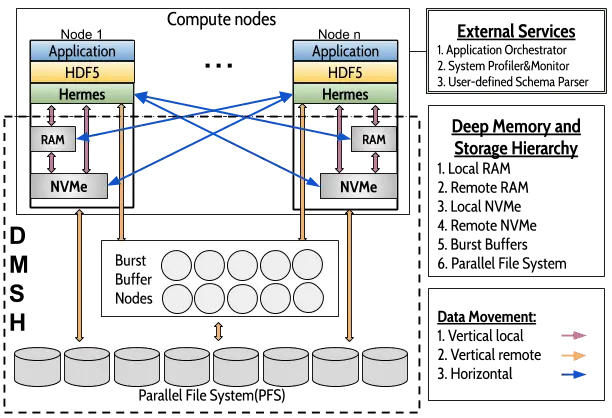
complete 2018–2024
Hermes
The multi-tier I/O buffering system I created during my PhD, carried through five years of NSF funding into maintained middleware at The HDF Group and forward into IOWarp.
paper Hermes at HPDC 2018
Anthony Kougkas, PhD
Associate Research Professor of Computer Science, Illinois Institute of TechnologyGuest Research Faculty, Argonne National LaboratoryCo-Founder and Executive Director, Gnosis Research Center
I create and lead research programs across high-performance computing, storage and I/O, data systems, and AI. From Hermes and LABIOS to IOWarp and CLIO, I turn questions into proposals, architectures, teams, partnerships, papers, and working software.
[ io = input / output ]
Current research program / IOWarp + CLIO
IOWarp and CLIO carry HPC data-systems discipline into context infrastructure for scientific AI.
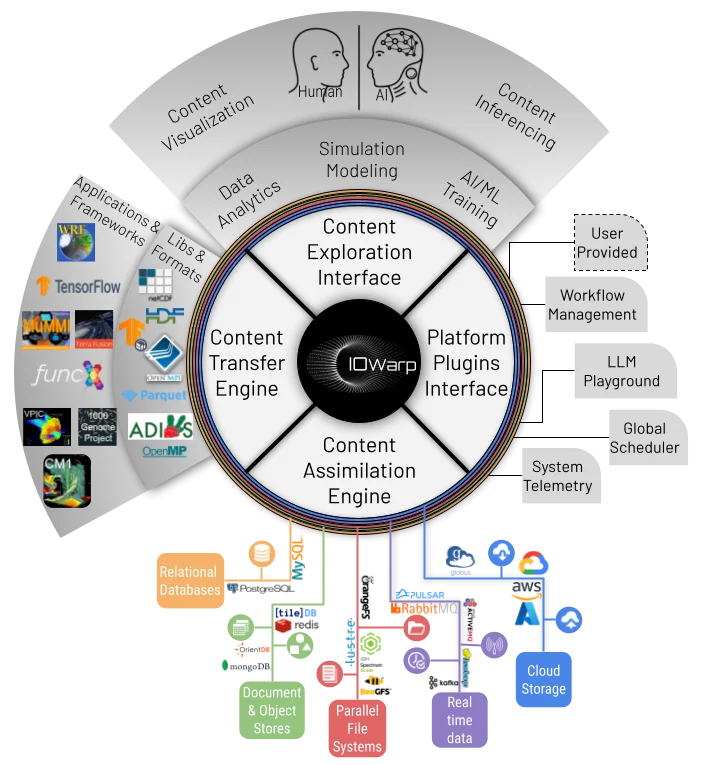
I lead the research direction and architecture across IOWarp and CLIO, coordinate the work among people and institutions, and contribute across the software ecosystem.
Research fabric / 2018–2026
HPC, storage, I/O, and data management remain the foundation. Each project addresses a different systems problem; together they lead toward reliable context for AI.
Now / Aug 2026
I am working on context infrastructure for AI that has to operate across scientific data, storage hierarchies, clusters, tools, and human decisions. IOWarp and CLIO are the larger research program. Clio Coder is one hands-on testbed for the contracts, provenance, and control that program needs.
Open the current snapshotResearch programs and systems
Five systems show how the research moved from storage hierarchy and I/O intent through time, data tasks, and AI workload behavior.
The multi-tier I/O buffering system I created during my PhD, carried through five years of NSF funding into maintained middleware at The HDF Group and forward into IOWarp.
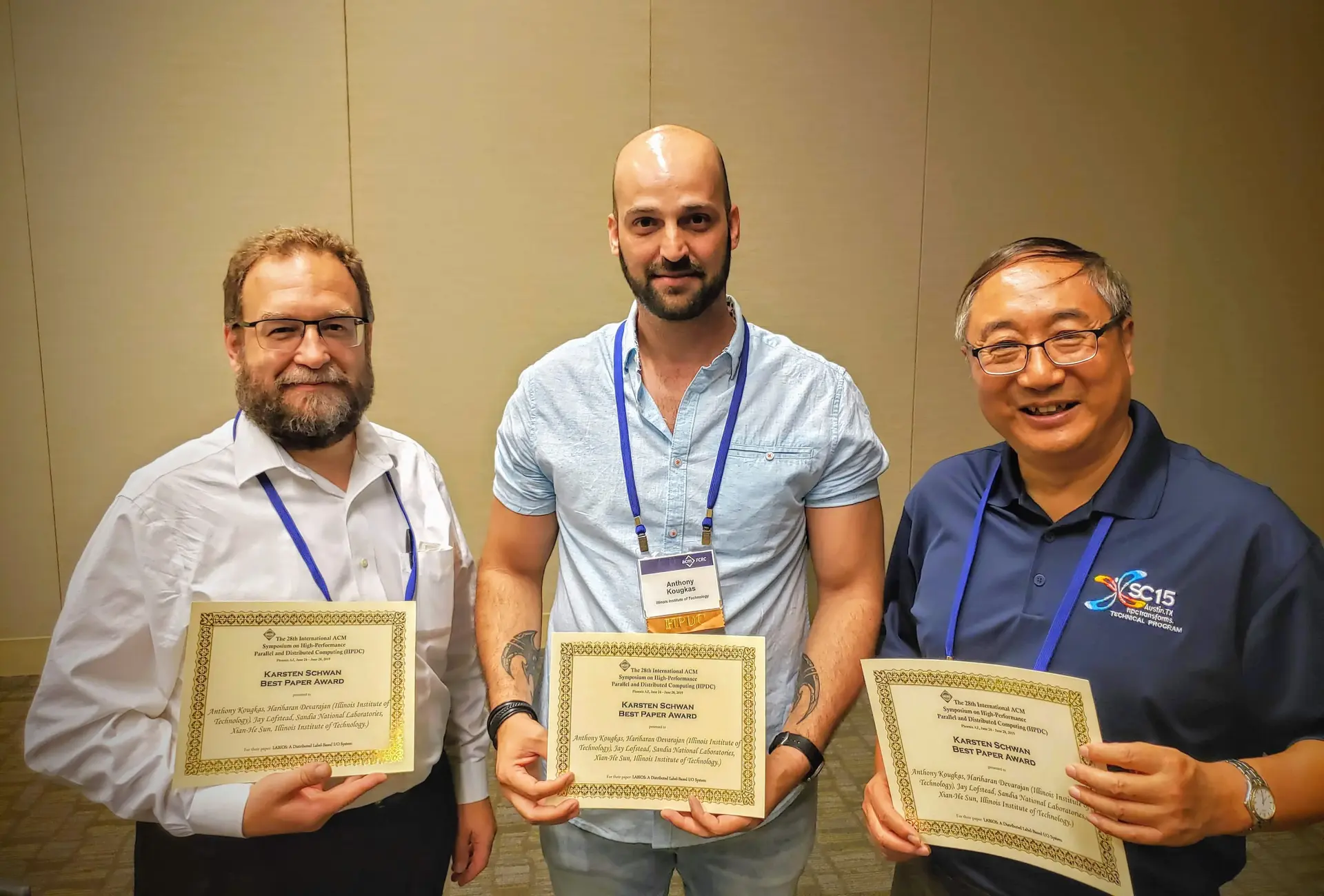
paper Hermes at HPDC 2018What happens when an I/O request carries its own intent. My dissertation idea, a best-paper award at HPDC, a US patent, an NSF award, and an evolving label-based runtime for data movement and transformation.
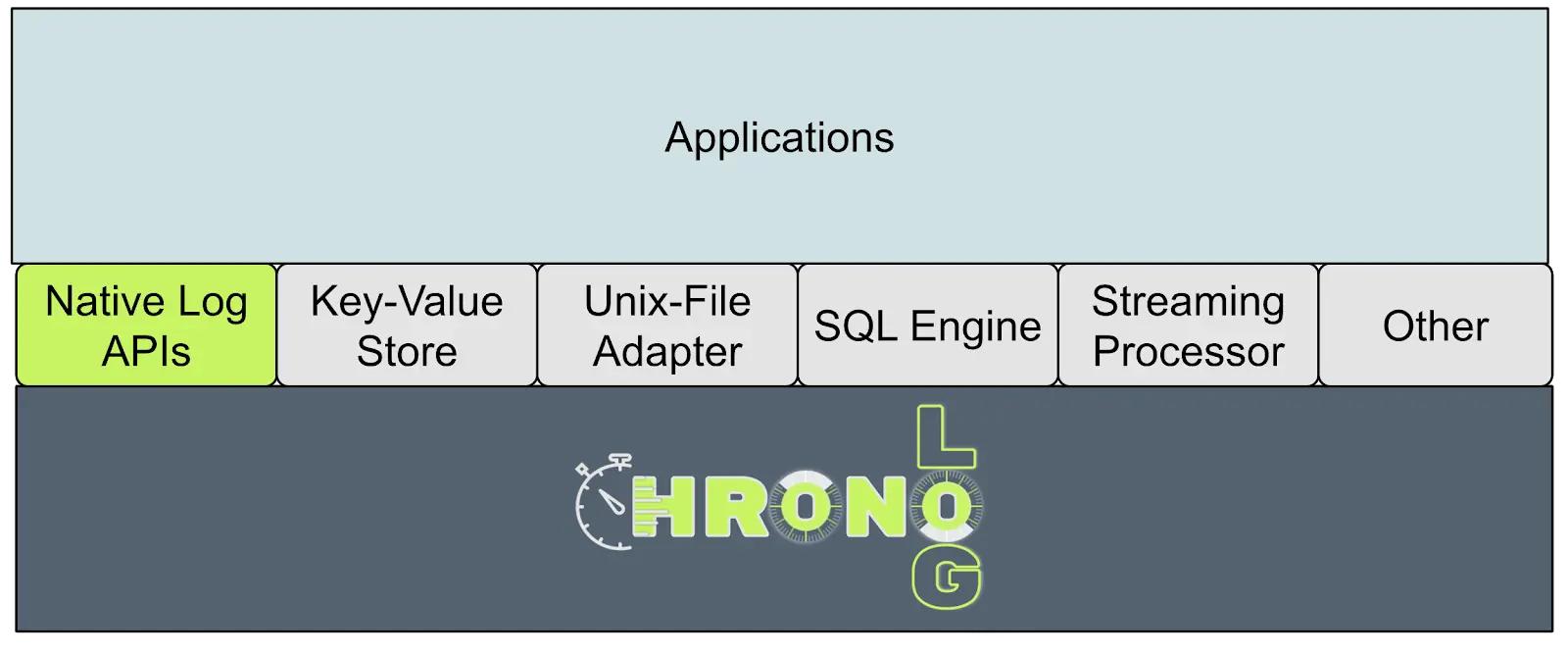
paper LABIOS at HPDC 2019A distributed shared log that orders activity data by physical time instead of consensus. My MSST 2020 design, funded by NSF for six years, and now at version 3 with SQL, pub/sub, and an MCP server.
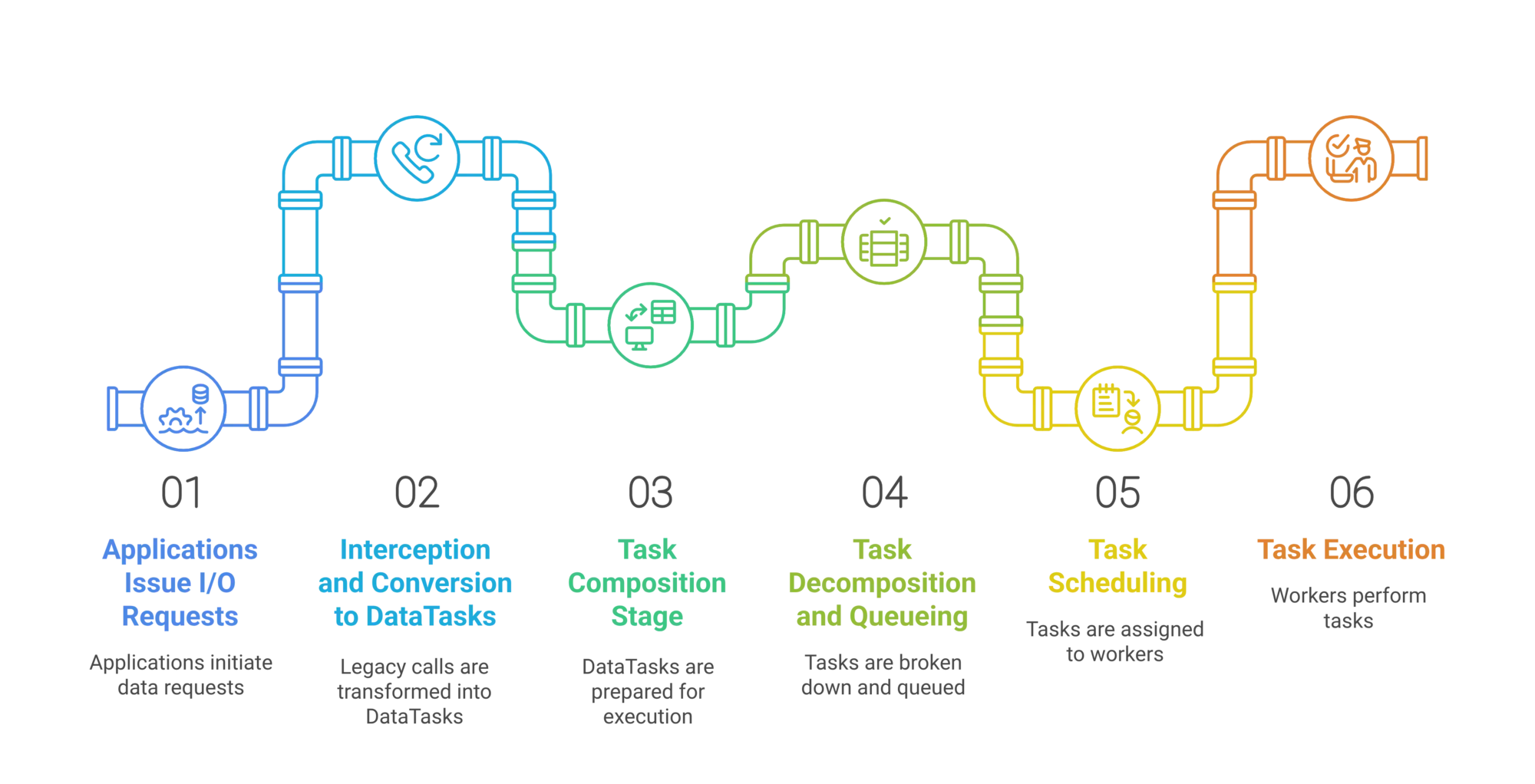
paper ChronoLog at MSST 2020A task-based I/O runtime built with Argonne under a DOE ASCR award. Labels became composable data tasks, online format translation with caching beat offline conversion by 49.6%, and the mechanisms were reimplemented inside CLIO Core.
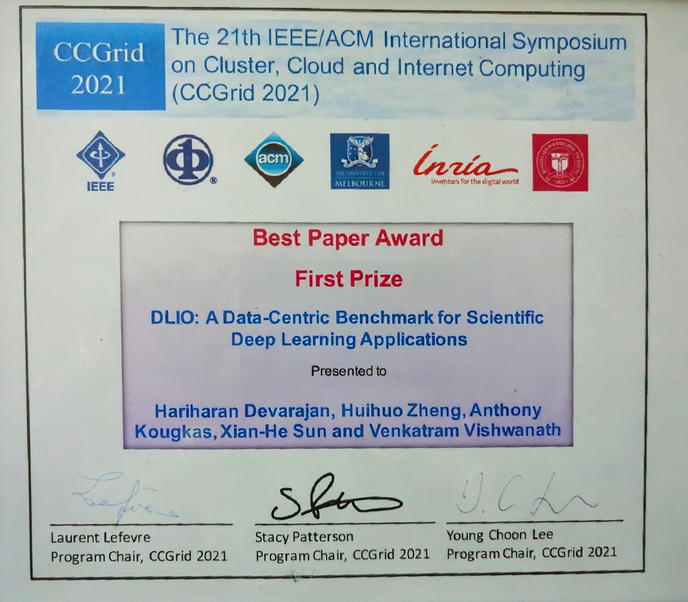
paper DTIO at SSDBM 2025I/O for scientific AI, measured before optimized. DLIO, the benchmark my team built with Argonne, won a best-paper award and became the workload generator inside MLPerf Storage. The line continues through Viper, WisIO, and KV-cache scheduling for LLM inference.
paper DLIO at CCGrid 2021Personal studio
Tools, prototypes, and writing developed at close range. These explorations test ideas that can later strengthen the larger research programs.
Coding systems
Local-first coding infrastructure for scientific software, built around typed tools, bounded workers, and durable receipts.
Research practice
Working notes on systems research, software, leadership, teaching, and the ideas that are still changing.
Tools and prototypes
Public software, small tools, and experiments alongside the collaborative research portfolio.
Recent journal
A capable model still fails when the system hands it the wrong slice of reality. CLIO's answer is to treat context the way a database treats state, and to seal a receipt for every action.
A working definition of "shipped" for research software, built around a named state someone else can run, evidence tied to that state, explicit limits, and a continuity signal, with Hermes and DLIO as the worked examples.
MLPerf Storage now uses DLIO, our deep-learning I/O benchmark, to generate its workloads. A research tool found a second life.
The people
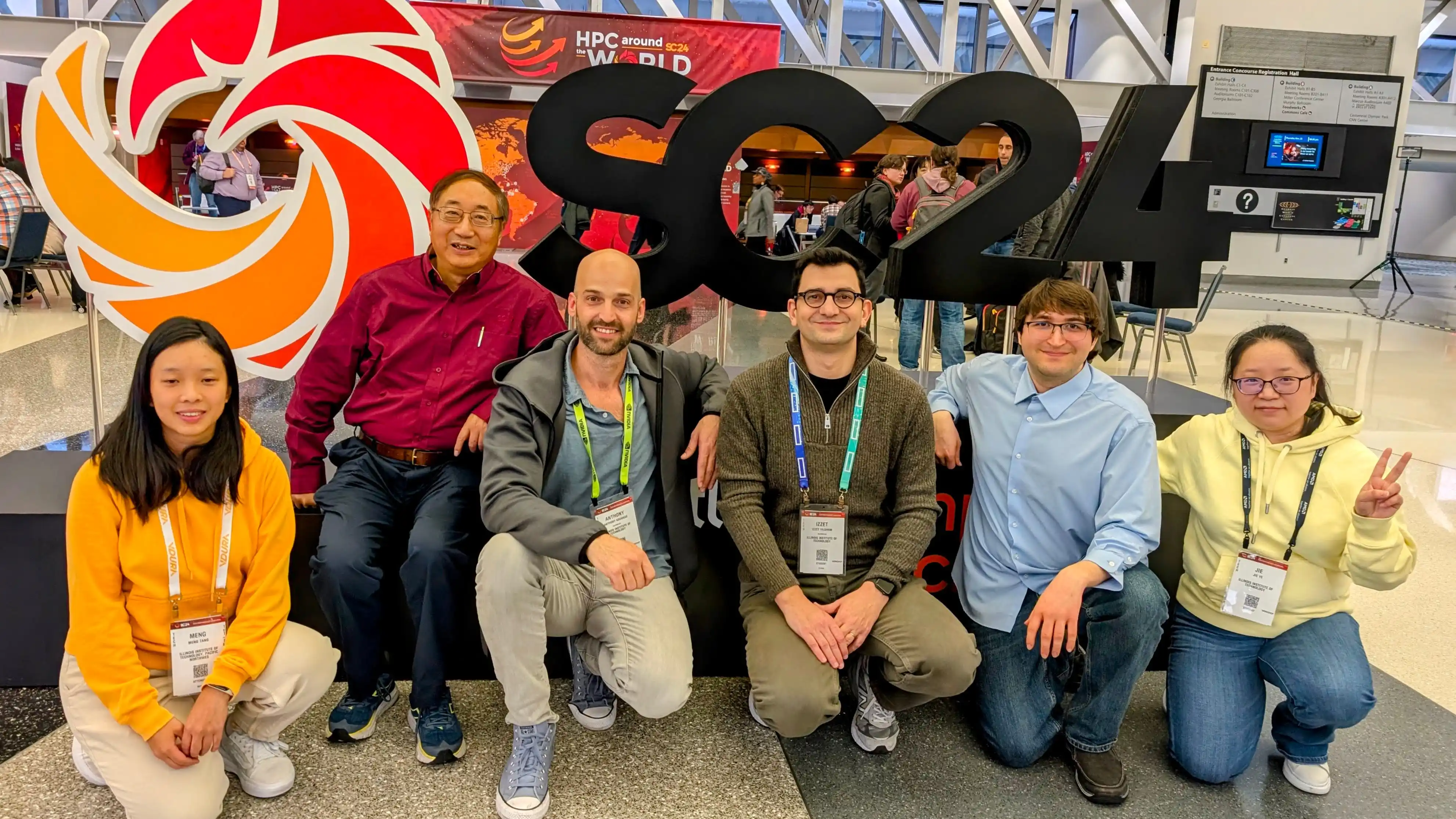
I build research programs with students, research staff, co-authors, institutional partners, and national laboratory collaborators. Leadership means giving people consequential ownership while keeping the whole architecture moving in one direction.
Meet the people behind the work